Noticing clumps of hair in the shower drain a few months after giving birth? You’re not alone — postpartum hair loss affects a large number of new mothers, and it’s far more common, and far more normal, than most people realise.
Why It Happens
During pregnancy, elevated hormone levels — particularly estrogen — keep hair in its growth phase longer than usual, which is why many mothers notice thicker, fuller hair while pregnant. After delivery, hormone levels drop back toward their pre-pregnancy baseline, and all the hair that was “held back” during pregnancy enters the shedding phase at once.
When Does It Start, and How Long Does It Last
Postpartum shedding typically begins around 3 to 6 months after delivery and can continue for several months from there. For most mothers, hair density gradually returns to normal within 6 to 12 months as the hair growth cycle resets itself. It can feel alarming in the moment, especially seeing noticeably more hair than usual on your brush or pillow, but for the vast majority of women this is a temporary, hormonally-driven phase rather than a sign of a deeper problem.
Common Myths, Cleared Up
“It means something is wrong with me.” In most cases, this shedding is a normal hormonal response, not a sign of an underlying health issue.
“It will never grow back.” For most mothers, hair density gradually returns to normal within 6 to 12 months as the growth cycle resets.
“Cutting your hair short will stop the shedding.” A shorter cut can make thinning less visually noticeable, but it doesn’t actually reduce how much hair is being shed.
“Only women with existing hair problems experience this.” Postpartum shedding can happen to mothers with previously thick, healthy hair — it’s driven by hormones, not prior hair condition.
When to See a Doctor Instead
If your shedding feels unusually severe, lasts well beyond a year, or comes with visible bald patches rather than general thinning, it’s worth discussing with a doctor to rule out other contributing causes such as thyroid changes, iron deficiency, or other postpartum nutrient depletions that sometimes overlap with normal shedding.
How HASOL Hair Growth Therapy Supports the Process
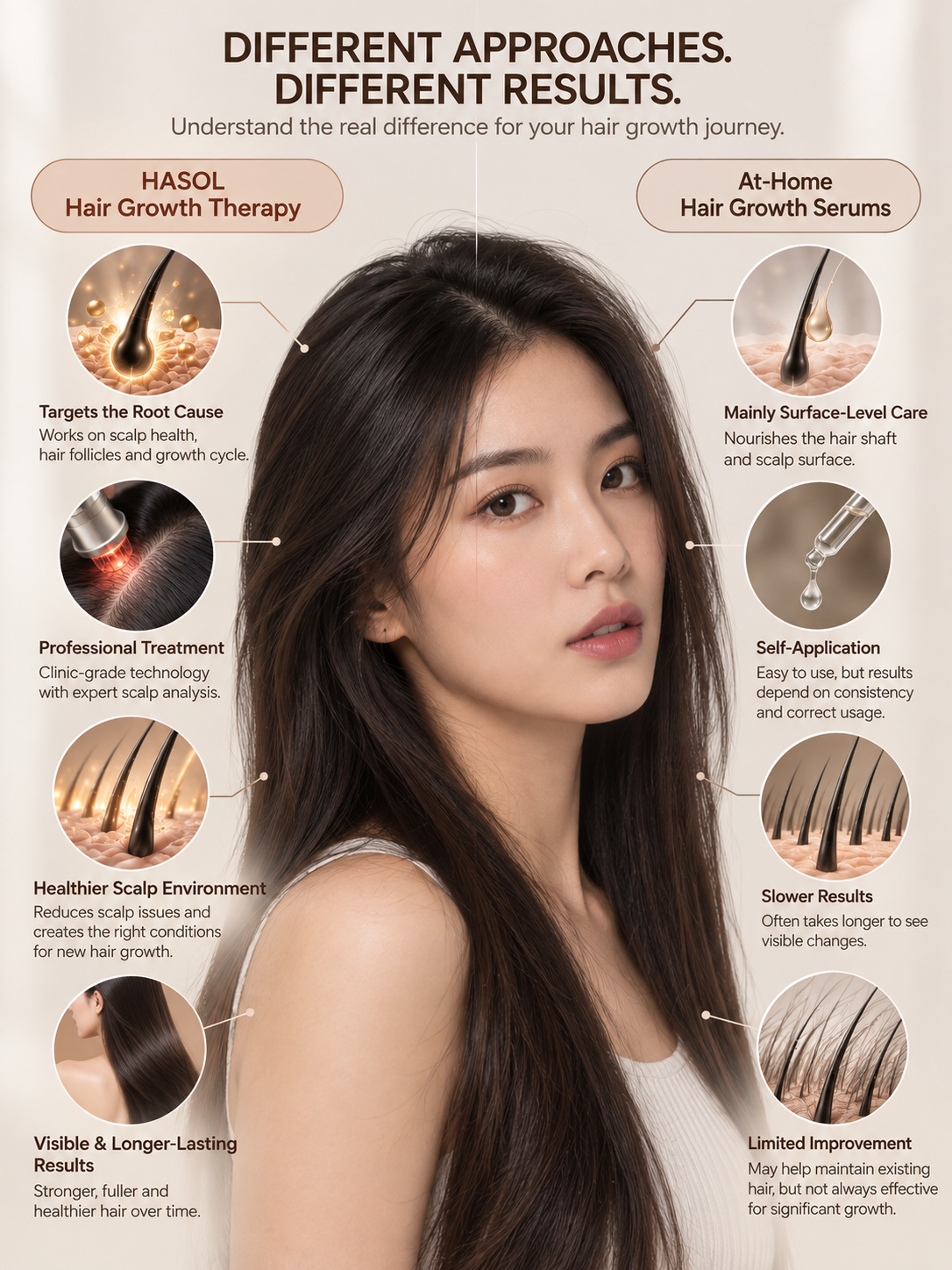
While postpartum shedding is largely hormonal and does resolve on its own, the recovery process can absolutely be supported. Hair Growth Therapy improves scalp circulation through acupressure and Guasha massage, helping deliver oxygen and nutrients to follicles that are working to re-establish a healthy growth cycle. The Low Level Laser Therapy component is also commonly used to support regrowth during this recovery period, alongside a calming, genuinely relaxing experience — something many new mothers need during this stage of life, beyond just the hair benefits.
Frequently Asked Questions
Q: Is Hair Growth Therapy safe while breastfeeding?
A: The treatment is topical and relaxation-based rather than involving ingested products, but it’s always a good idea to mention that you’re breastfeeding during your consultation so your stylist can advise accordingly.
Q: How soon after giving birth can I start treatment?
A: Many mothers wait until they feel physically ready to sit through a full session comfortably, often a few weeks to a couple of months postpartum — your doctor’s clearance and your own comfort level are the best guides here.
Q: Will my hair go back to exactly how it was before pregnancy?
A: For most mothers, hair density does return close to its pre-pregnancy baseline within about a year, though individual timelines vary based on hormones, stress levels, and overall scalp health.