Scalp serums have become one of the biggest trends in haircare, with more brands than ever launching peptide-based, caffeine-infused, or botanical hair growth formulas for daily use at home. If you’ve been using one and wondering whether it’s actually enough, here’s an honest breakdown of what each approach realistically does.
The Rise of the Scalp Serum
The logic behind scalp serums borrows heavily from facial skincare — the idea that daily, low-concentration active ingredients can support skin health over time. Applied to the scalp, this has driven demand for lightweight leave-on formulas that people can use as part of a daily routine without needing to visit a salon or clinic.
What At-Home Scalp Serums Do Well
Daily-use serums are convenient and useful for maintenance — applying active ingredients like peptides or caffeine consistently over time can genuinely support a healthy scalp environment between salon visits. They’re a reasonable first step, especially for prevention or for maintaining results after a professional treatment.
Where At-Home Serums Fall Short
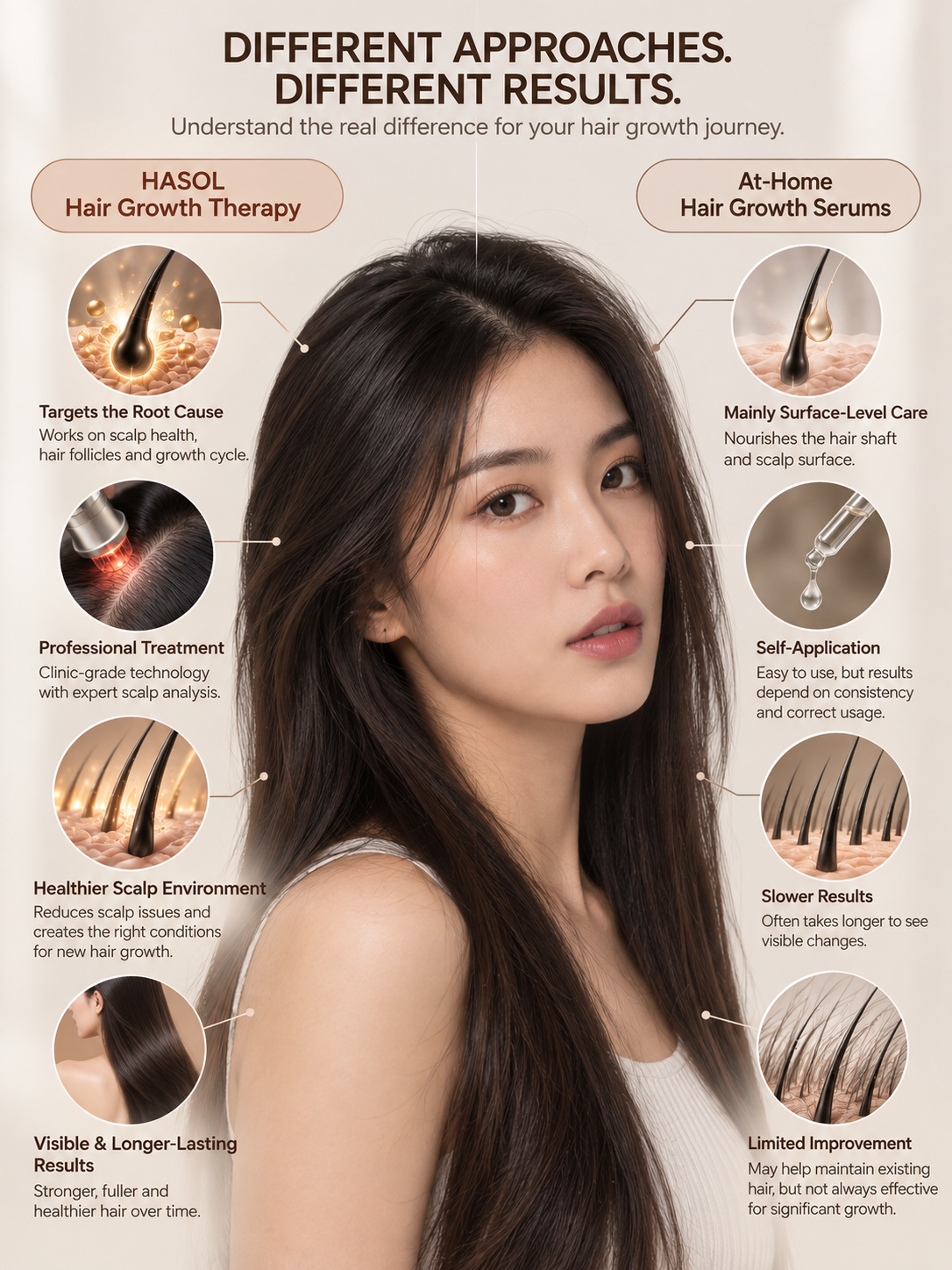
No scalp diagnosis. A serum is applied the same way regardless of whether your scalp is oily, dry, inflamed, or congested — it can’t adjust to what your scalp specifically needs the way a professional consultation can.
Limited penetration. Without proper cleansing beforehand, serums are often applied on top of existing buildup, oil, or product residue, which limits how well the active ingredients actually reach the scalp and follicles.
No circulation-boosting techniques. Serums alone don’t replicate the physical stimulation — massage, acupressure, Guasha — that professional treatments use to actively improve blood flow to the follicles.
No access to clinical-grade technology. Tools like Low Level Laser Therapy, used in HASOL Hair Growth Therapy, aren’t something a bottle of serum can replicate at home.
The Realistic Approach
Think of it less as “serum vs salon” and more as complementary. A professional treatment like Hair Growth Therapy does the deeper work — proper scalp analysis, deep cleansing, circulation stimulation, and LLLT — while a well-formulated serum can help maintain results between sessions. Relying on serum alone, without ever addressing scalp buildup or circulation directly, is usually why people feel like “nothing is working” despite months of consistent daily use.
How to Combine Both for Best Results
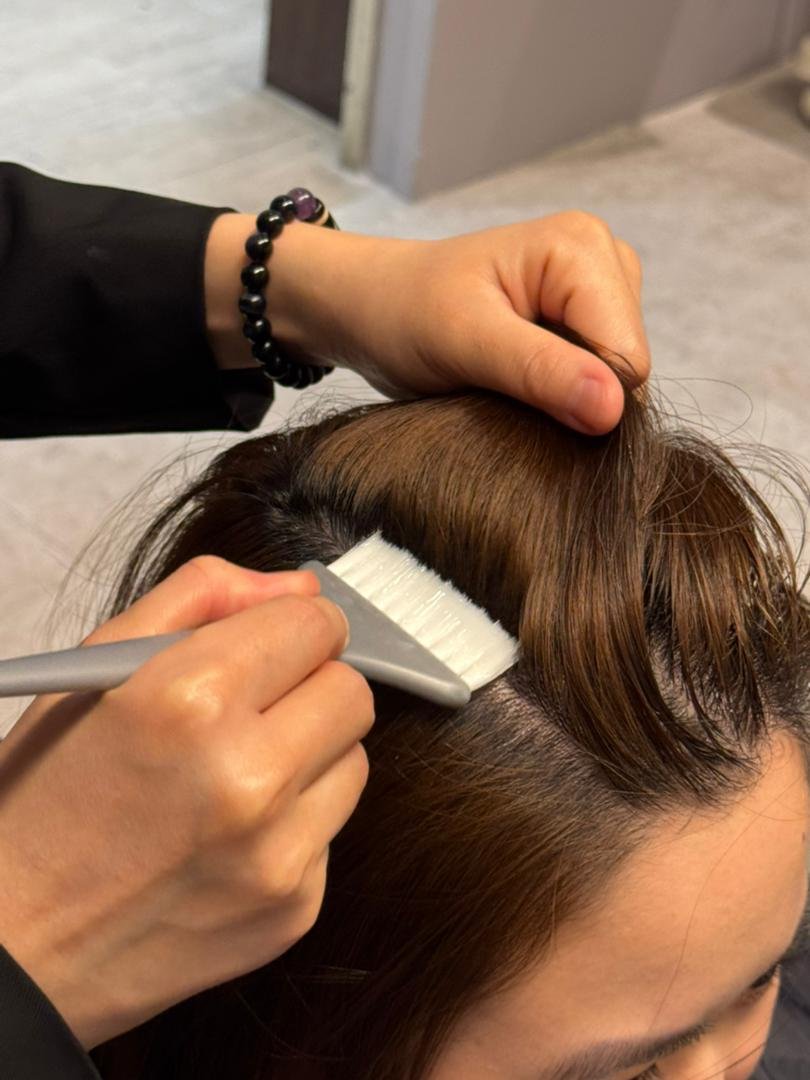
Book a professional Hair Growth Therapy session on a regular schedule to address deeper buildup and stimulate circulation directly.
Use a scalp serum on the days between sessions to help maintain a healthier scalp environment.
Avoid layering too many new products at once — introduce one new serum or treatment at a time so you can actually tell what’s working.
Frequently Asked Questions
Q: Which scalp serum ingredients actually work?
A: Ingredients like caffeine, peptides, and niacinamide have reasonable supporting research for scalp health, but results vary by formulation and individual scalp condition, which is why they work best alongside, not instead of, a proper treatment routine.
Q: Can I use a scalp serum right after a salon treatment?
A: Generally yes, though it’s best to check with your stylist after your session, since some treatment steps are designed to be left on the scalp without additional products layered on top immediately after.
Q: Is Hair Growth Therapy safe to combine with prescription treatments like minoxidil?
A: Many clients do combine the two, but it’s best to mention any prescription treatments during your consultation so your stylist can adjust the session appropriately.