Not every scalp problem needs the same fix. Before booking a scalp treatment, it helps to know exactly what your scalp is dealing with — because an oily scalp and a dry scalp need very different care, and treating one as the other can quietly make things worse.
Why It’s Hard to Tell the Difference in Malaysia’s Climate
Kuala Lumpur’s humidity makes this trickier than it sounds. Some scalps produce excess oil to compensate for surface dehydration, meaning a scalp can be dry underneath and look oily on the surface at the same time. This is exactly why HASOL Scalp Reset begins every session with a proper scalp analysis rather than a generic routine — guessing which type you are, and treating it wrong, often makes the underlying issue worse.
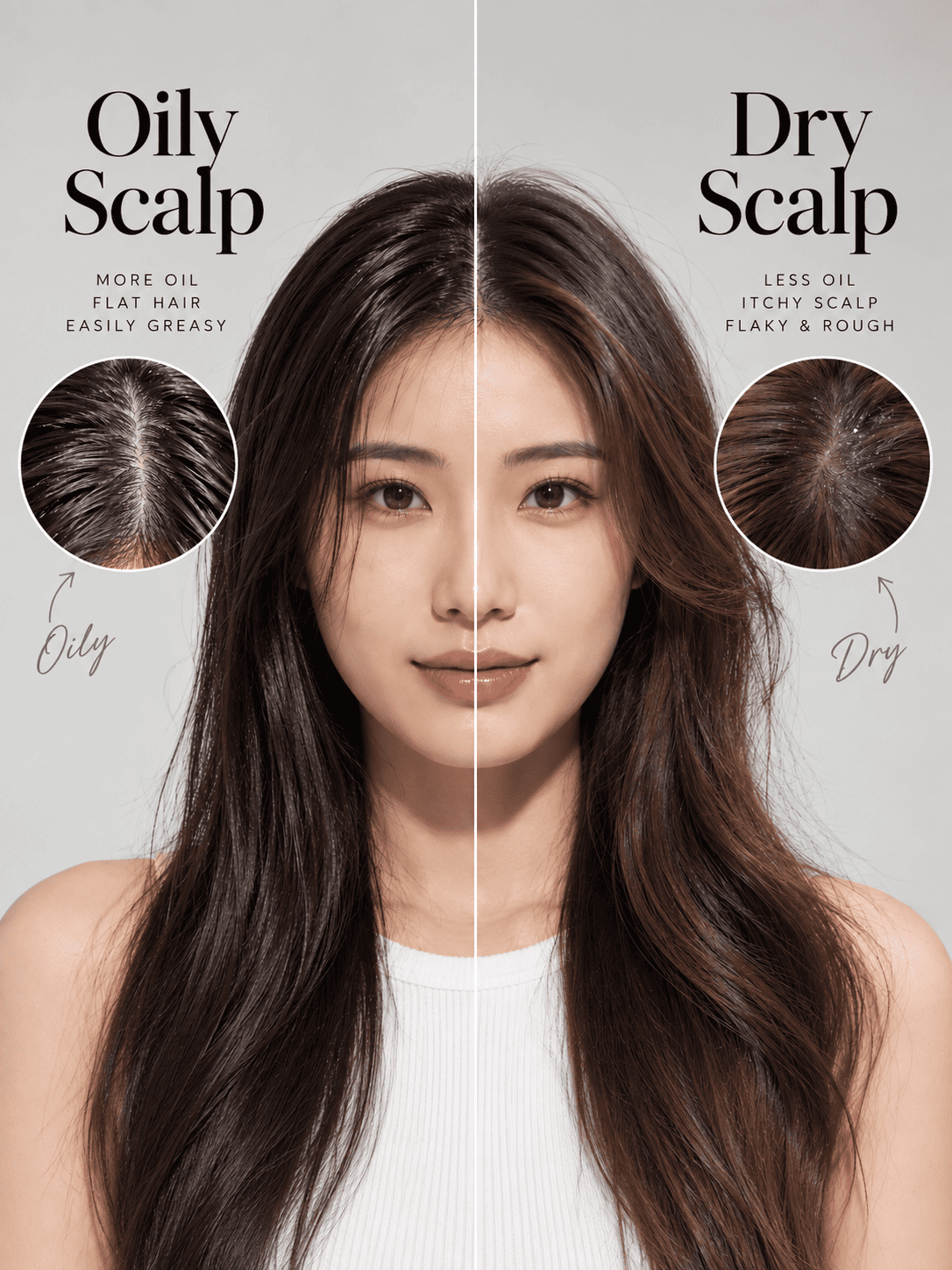
Signs of an Oily Scalp
Hair feels greasy by midday, even after washing the night before.
Visible shine at the roots, not just at the ends.
Flat, weighed-down roots that lose volume within hours of styling.
Breakouts or small bumps near the hairline, similar to how oily facial skin behaves.
Signs of a Dry Scalp
Tightness or itching, especially right after washing.
Fine, white flaking that scatters easily (different from oily dandruff, which tends to clump).
Hair that feels brittle or rough near the roots specifically, not just at the ends.
Scalp sensitivity or a stinging sensation after heat styling or using strong shampoos.
The Combination Scalp Trap
A surprising number of clients in Malaysia actually have what’s best described as a combination scalp — oily at the crown where oil glands are more active, but dry and flaky near the hairline or temples where the skin is thinner and more exposed. Treating the whole scalp with one generic product usually improves one area while worsening the other, which is why a proper consultation matters more than picking a product off the shelf.
How HASOL Scalp Reset Adjusts to Each Type
For oily scalps, our stylists focus the treatment on deeper cleansing and oil regulation, without stripping the scalp bare — over-stripping only triggers the glands to produce even more oil in response.
For dry or sensitive scalps, the treatment shifts toward hydration and barrier repair, using a gentler mask and calming serum to rebuild moisture without clogging pores.
For combination scalps, the treatment can be zone-adjusted, addressing the crown and hairline differently within the same session.
What Happens If You Treat the Wrong Type
Using clarifying, oil-control shampoo on a dry scalp can strip its natural barrier, leading to more flaking and sensitivity over time.
Using heavy, moisturising products on an oily scalp can clog follicles further, worsening breakouts and slowing hair growth.
Repeating this cycle for months is one of the most common reasons people feel like “nothing works” for their scalp, when in fact they’ve simply never had an accurate diagnosis.
Frequently Asked Questions
Q: Can my scalp type change over time?
A: Yes. Hormonal changes, stress, weather, and even the products you use regularly can shift your scalp from oily to dry or vice versa, which is why re-assessing periodically is more useful than sticking to one routine indefinitely.
Q: Should I still exfoliate my scalp if it’s oily?
A: Gentle exfoliation is often helpful for oily scalps specifically, as it helps clear the buildup that triggers excess oil production in the first place — this is built into the Scalp Reset process rather than something you need to do separately at home.
Q: How do stylists actually diagnose scalp type during the consultation?
A: Your stylist will visually assess your scalp under proper lighting, check specific zones (crown, hairline, temples), and ask about your washing habits, climate exposure, and any recent treatments before recommending the right approach.